Materials

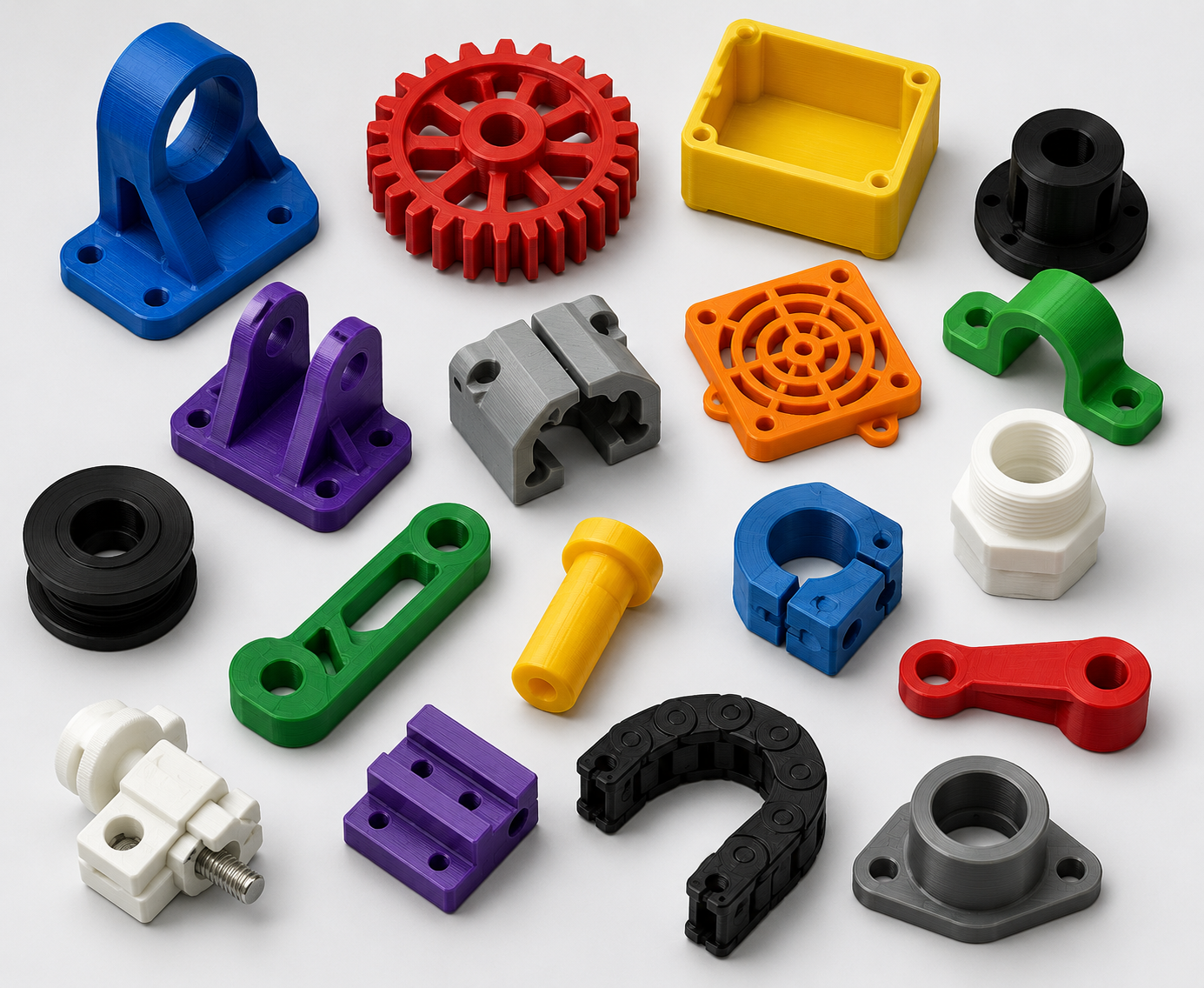
Application-driven polymers for functional parts

We select materials based on performance requirements, environment, and fit-for-use Every job is reviewed for manufacturability and risk before production

Functional prototypes Fixtures & tooling Low-volume production Revision-aware builds

Quick guidance

Pick by requirement, not habit

Fit & form start with PLA or PETG
Heat & toughness consider ABS or ASA
Strength-critical consider Nylon or composites
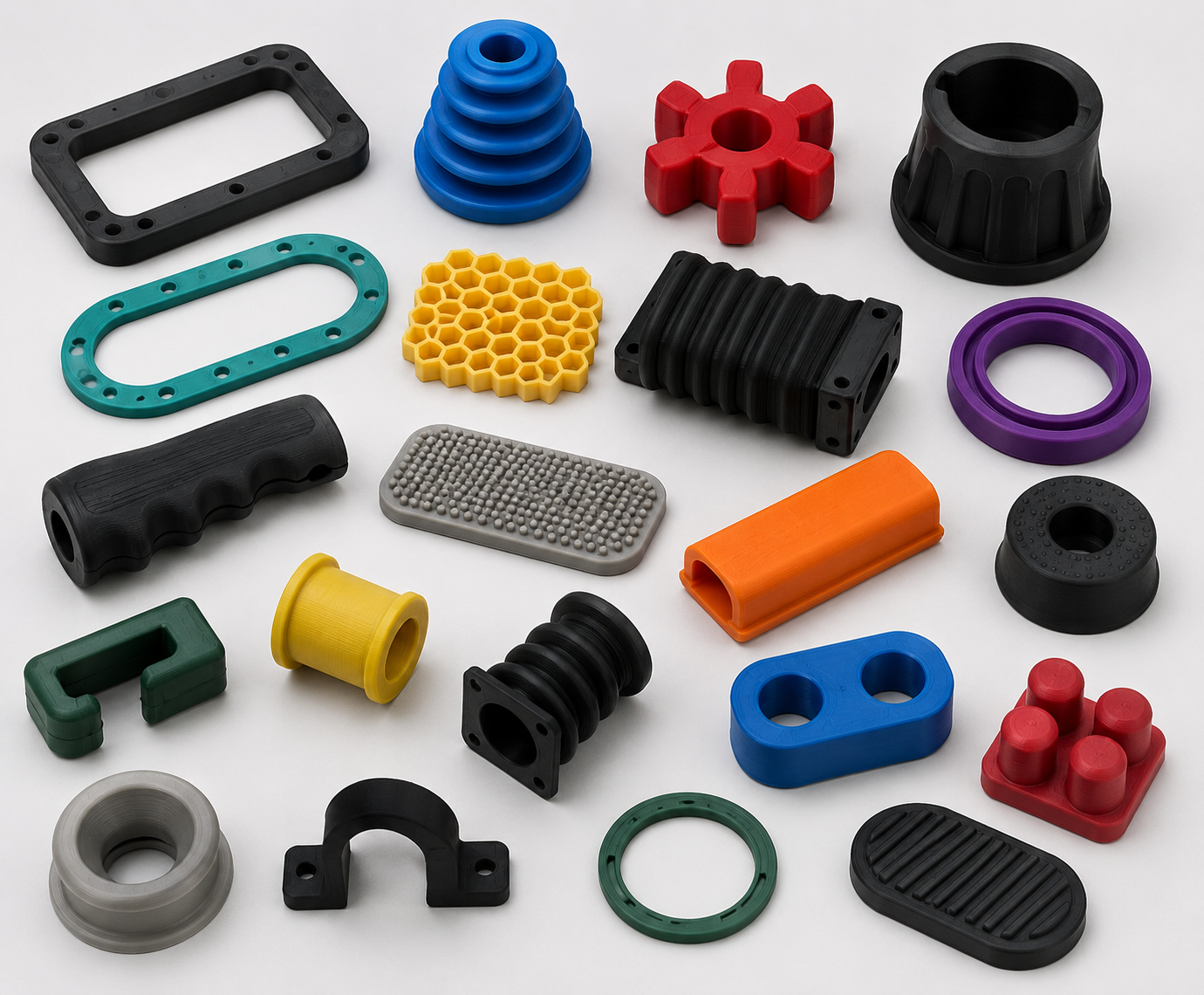
Flex choose TPU

Not sure what to choose Send the application and environment and we’ll recommend the best fit

Material catalog

Common options we run for functional work

Availability can vary by color and lead time If you need a specific grade or brand requirement, we can review it during engineering intake

PLA

Fast, stable prints for fit checks and rigid fixtures

Fast iteration Dimensional stability

Best for

  • Fit and form prototypes
  • Assembly mockups and checking clearances
  • Rigid jigs and fixtures with low heat exposure
  • Quick turnaround revisions

Avoid when

  • Parts see elevated temperatures
  • Impact resistance is critical
  • Outdoor UV exposure is expected
  • Chemical exposure is significant
Notes PLA is great for speed and geometry validation, and often the best first iteration for fixtures before upgrading material

PETG

Durable, slightly flexible, and more chemical resistant than PLA

Durable Chemical resistance

Best for

  • Functional prototypes needing toughness
  • Snap fits with gentle compliance
  • Fixtures exposed to mild chemicals
  • General purpose end-use parts

Avoid when

  • High heat is the main driver
  • You need very crisp surface detail
  • Stiffness must be maximized
  • Threads require aggressive torque
Notes PETG is a strong default when you want more durability than PLA without stepping into higher warp-risk materials

ABS

Tough, heat-tolerant parts with good post-processing options

Tough Heat capable

Best for

  • Functional housings and enclosures
  • Parts needing higher heat resistance
  • Fixtures exposed to moderate heat
  • Applications benefiting from smoothing

Avoid when

  • Dimensional stability is extremely tight
  • You need the fastest possible turnaround
  • The geometry is thin and wide with high warp risk
  • Outdoor UV exposure is expected
Notes ABS can deliver excellent functional performance when the build strategy is designed to manage shrink and warpage

ASA

ABS-like strength with better UV stability for outdoor use

Outdoor UV stable

Best for

  • Outdoor brackets and housings
  • Functional parts seeing sun exposure
  • Automotive-like environments
  • Durable fixtures where UV matters

Avoid when

  • You need the smoothest cosmetic finish quickly
  • Warp-sensitive geometry dominates
  • Low cost is the top driver
  • Heat performance beyond ABS/ASA is required
Notes ASA is often the best choice when ABS performance is needed but the part must live outside

Nylon

Strong, wear resistant, and great for load-bearing functional parts

Strength Wear resistance

Best for

  • Functional brackets and mechanisms
  • Wear surfaces and sliding interfaces
  • Parts needing toughness and fatigue resistance
  • Fixtures that must survive repeated cycles

Avoid when

  • Very tight dimensions are required without iteration
  • The part will be in constant high-humidity environments
  • Geometry is extremely thin and warp-prone
  • Cosmetic appearance is the primary goal
Notes Nylon is a workhorse for functional performance, but it benefits from intentional build strategy and realistic tolerance planning

TPU

Flexible parts for damping, gripping, sealing, and protective features

Flexible Impact damping

Best for

  • Gaskets and protective covers
  • Grippers, feet, and anti-slip features
  • Vibration damping components
  • Flexible housings and strain relief

Avoid when

  • High stiffness is required
  • You need fine threads and high torque fasteners
  • Very sharp edges and corners must be maintained
  • The part must hold tight tolerances without tuning
Notes TPU performance depends heavily on geometry and wall thickness, so we review designs carefully before printing

Fiber-reinforced composites

High stiffness and strength for tooling and strength-critical fixtures Typical options include carbon fiber or glass fiber filled polymers depending on requirement

High stiffness Tooling Strength-critical

Best for

  • Rigid fixtures and drill guides
  • Jigs needing improved stiffness
  • Parts where deflection must be minimized
  • Tooling for repeated cycles

Tradeoffs

  • Surface finish is often more matte
  • Abrasive material can increase wear on cutting tools
  • Sharp internal corners can be stress risers
  • Not ideal for thin snap features

Avoid when

  • You need high cosmetic quality
  • Very small features dominate the design
  • Flexibility is required
  • Low cost is the primary driver
Notes Composite selection depends on your stiffness target, environment, and feature sensitivity We will recommend the best option during engineering review

Design guidance

Designing for predictable outcomes

Polymer additive manufacturing has real constraints We review your part and recommend changes when needed to improve strength, printability, and dimensional success

Tolerances

Tolerances depend on geometry, material, and orientation For critical fits, we recommend iteration or adding adjustability like slots, shims, or reamed holes

  • Critical fits should be called out during quoting
  • Holes and threads often benefit from post-processing
  • Large flat parts require warp-aware design
  • We can suggest clearances for mating parts

Threads & fasteners

Printed threads can work, but the best approach depends on load and service environment

  • Heat-set inserts recommended for repeated assembly
  • Self-tapping screws work for light duty plastics
  • Higher torque needs inserts or metal hardware
  • We can propose boss geometry improvements

Surface finish

Layer lines are normal for FDM-style processes Finishing options depend on material and requirements

  • Deburr and edge break available
  • Support removal and cleanup standard
  • Sanding or smoothing available by request
  • Cosmetic targets should be defined up front

Environmental factors

Temperature, UV, chemicals, and humidity can change performance over time

  • Outdoor parts typically prefer ASA
  • Chemicals often favor PETG depending on exposure
  • Heat pushes parts toward ABS/ASA or specialty options
  • Nylon can absorb moisture and shift dimensions

Material selection

Tell us what the part must do

The fastest way to choose correctly is to define the application If you include these details, we can recommend the best material and build strategy

Operating temperature range
Loads, impacts, or repeated cycles
Chemical exposure or cleaning agents
Fit requirements and mating components
Cosmetic expectations and finish

If you need a specific resin, grade, or brand callout, note it in your request and we’ll confirm availability

Not sure which material is right

Send the application, environment, and critical features We’ll recommend the best material and build strategy before printing