Process

A disciplined workflow for predictable outcomes

We don’t treat additive manufacturing like a push-button service Our process is designed to reduce reprints, protect timelines, and deliver parts that work the first time

Engineer-reviewed builds Revision-aware workflow Controlled parameters Inspection included

At a glance

What to expect

Fast clarity on feasibility, lead time, and material fit
Build strategy defined intentionally for function
Consistent output through controlled parameters
Inspection for fit and finish on functional parts

The goal is simple: fewer surprises and parts you can count on.

Workflow

The KDP process from intake to delivery

Every job follows the same disciplined sequence. For rapid iterations, we keep communication tight and changes controlled so you can move fast without losing consistency.
1

Intake and requirements

We start by understanding what the part must do, not just what it looks like. This helps us select the right material, identify risk areas, and avoid preventable reprints.

You provide

  • CAD file (STEP preferred) and drawings if available
  • Quantity, deadline, and target use case
  • Critical fits, mating parts, and inspection needs
  • Environment: heat, UV, chemicals, wear, humidity

We confirm

  • Material recommendation and risk notes
  • Feasibility and lead time
  • Any design adjustments to improve success
  • Finish and documentation expectations
2

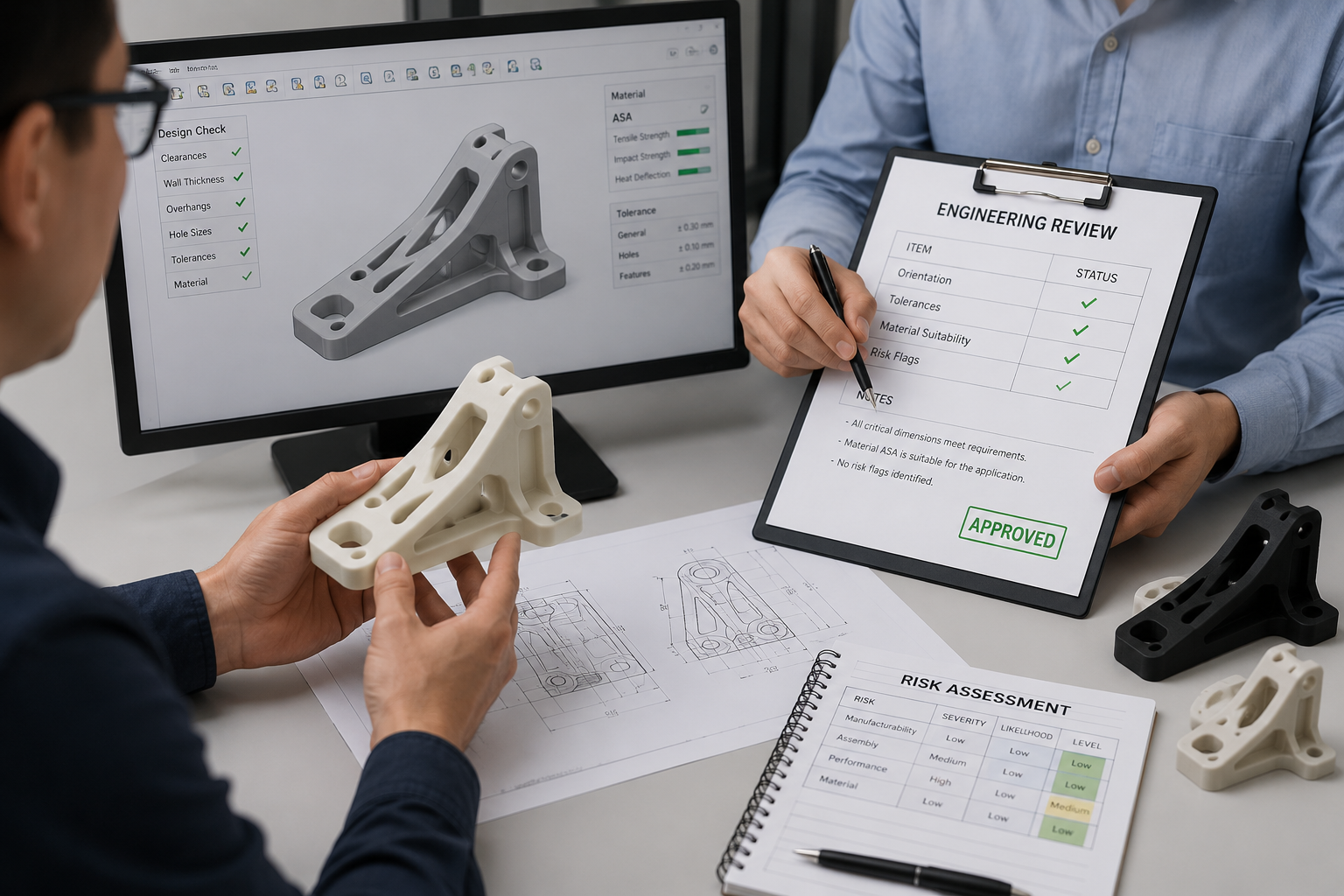
Engineering review and build strategy

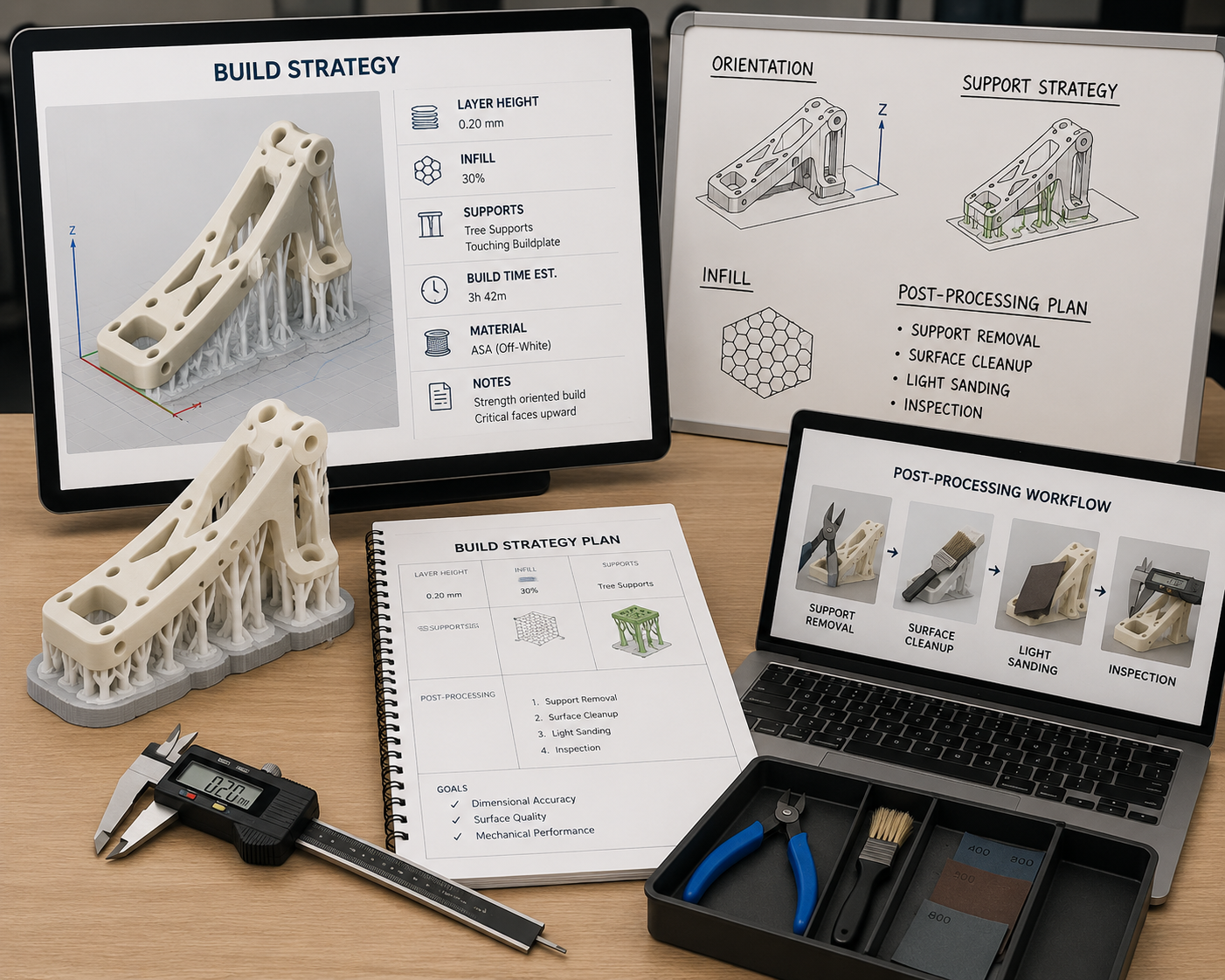
Before printing, we define a build strategy aligned to function. That includes orientation, supports, wall strategy, and post-processing needs.

What we evaluate

  • Orientation and anisotropy direction
  • Overhangs, bridges, and support sensitivity
  • Wall thickness and feature robustness
  • Warp-prone geometry and shrink behavior
  • Threads, inserts, and fastener strategy

Outcome

  • Defined build parameters for repeatability
  • Support and cleanup plan
  • Finishing approach when required
  • Clear plan for iteration if needed
3

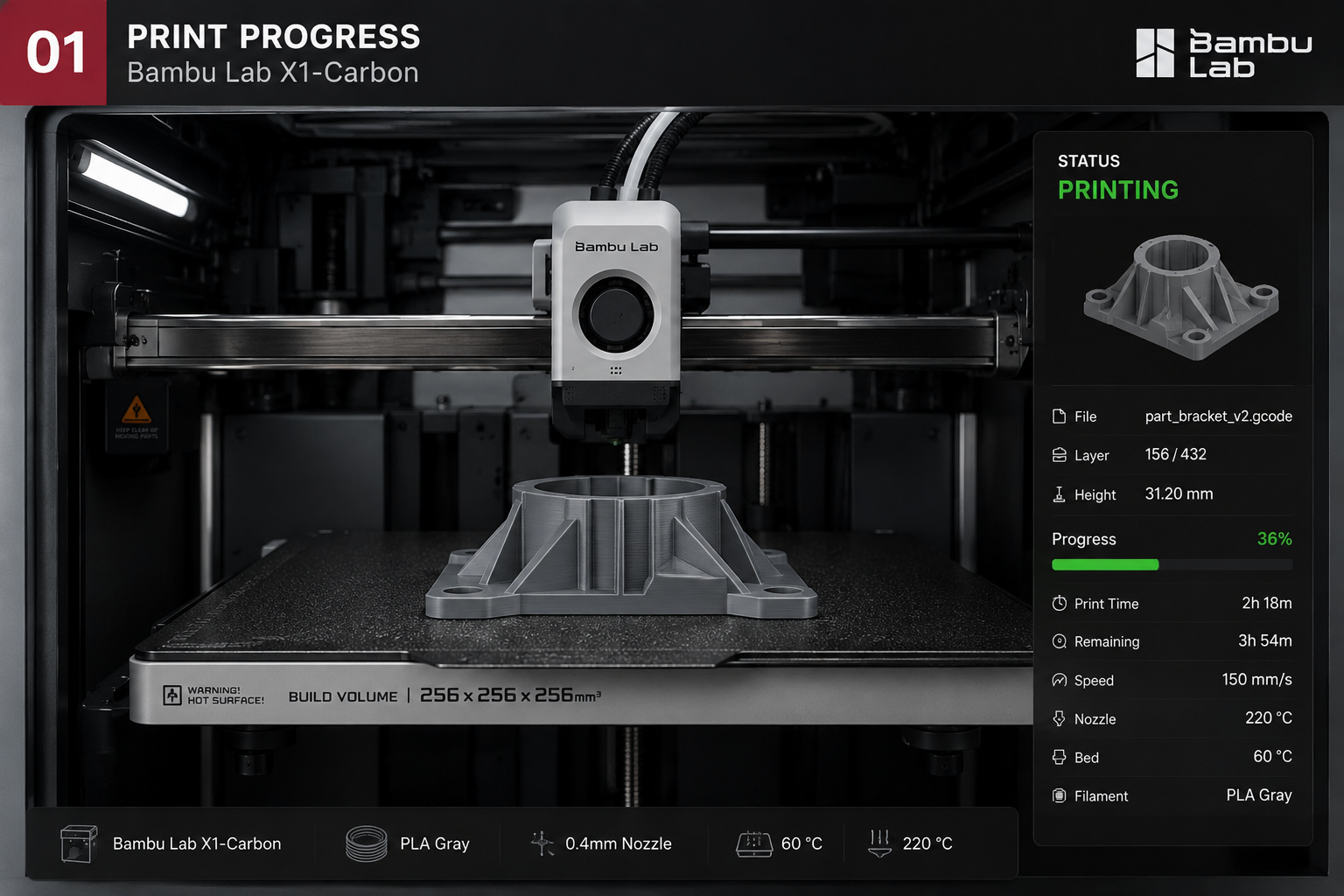
Production and in-process control

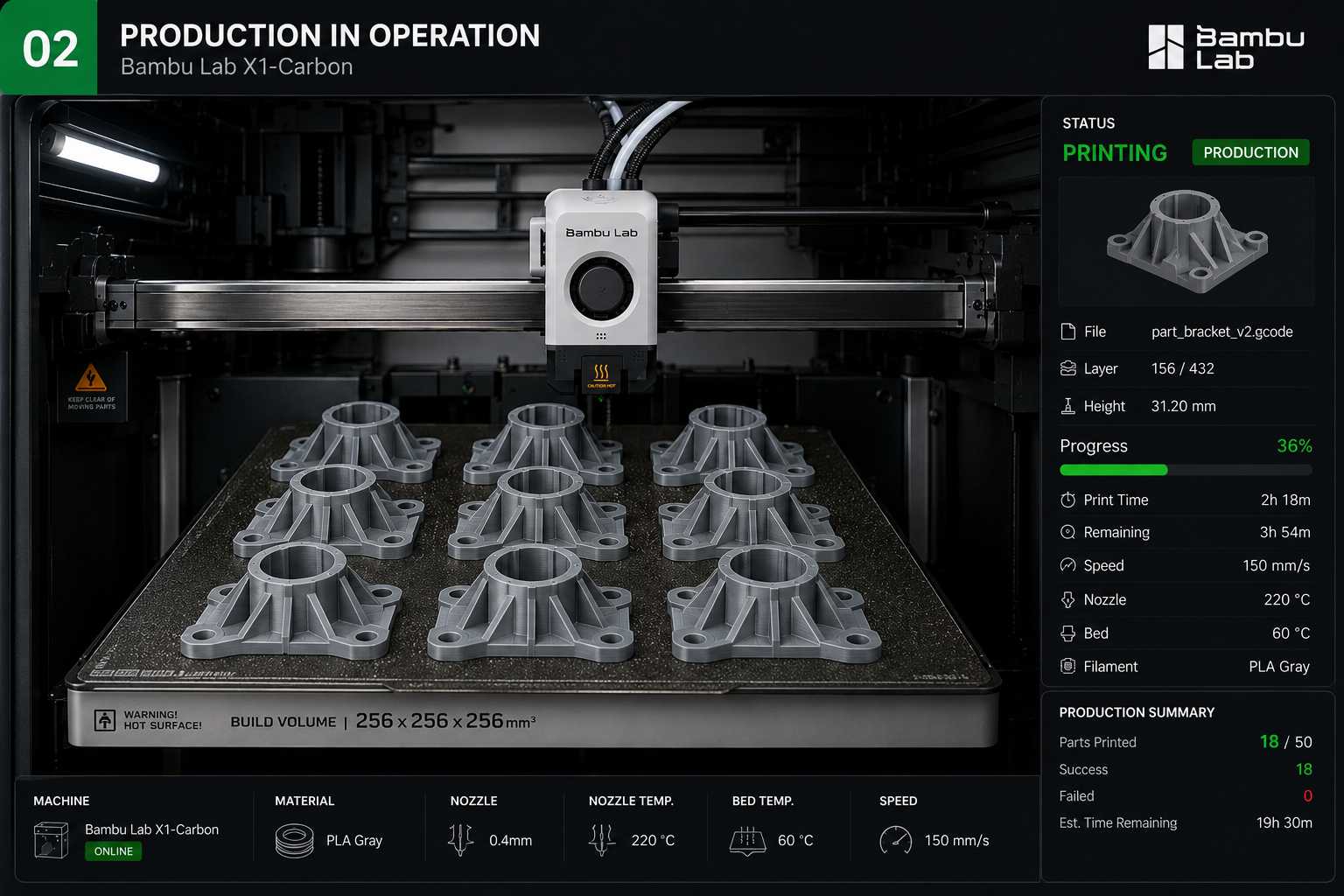
We run builds using controlled parameters and consistent setup practices. For batch work and repeat orders, we aim for predictable output across parts and across time.

What we control

  • Build profile selection aligned to part function
  • Support approach and part layout strategy
  • Material handling suited to the polymer type
  • Repeatable setup for low-volume production

For repeat builds

  • Revision awareness and change tracking
  • Consistent parameters for batch repeatability
  • Optional build notes for traceability
  • Order-to-order consistency planning
4

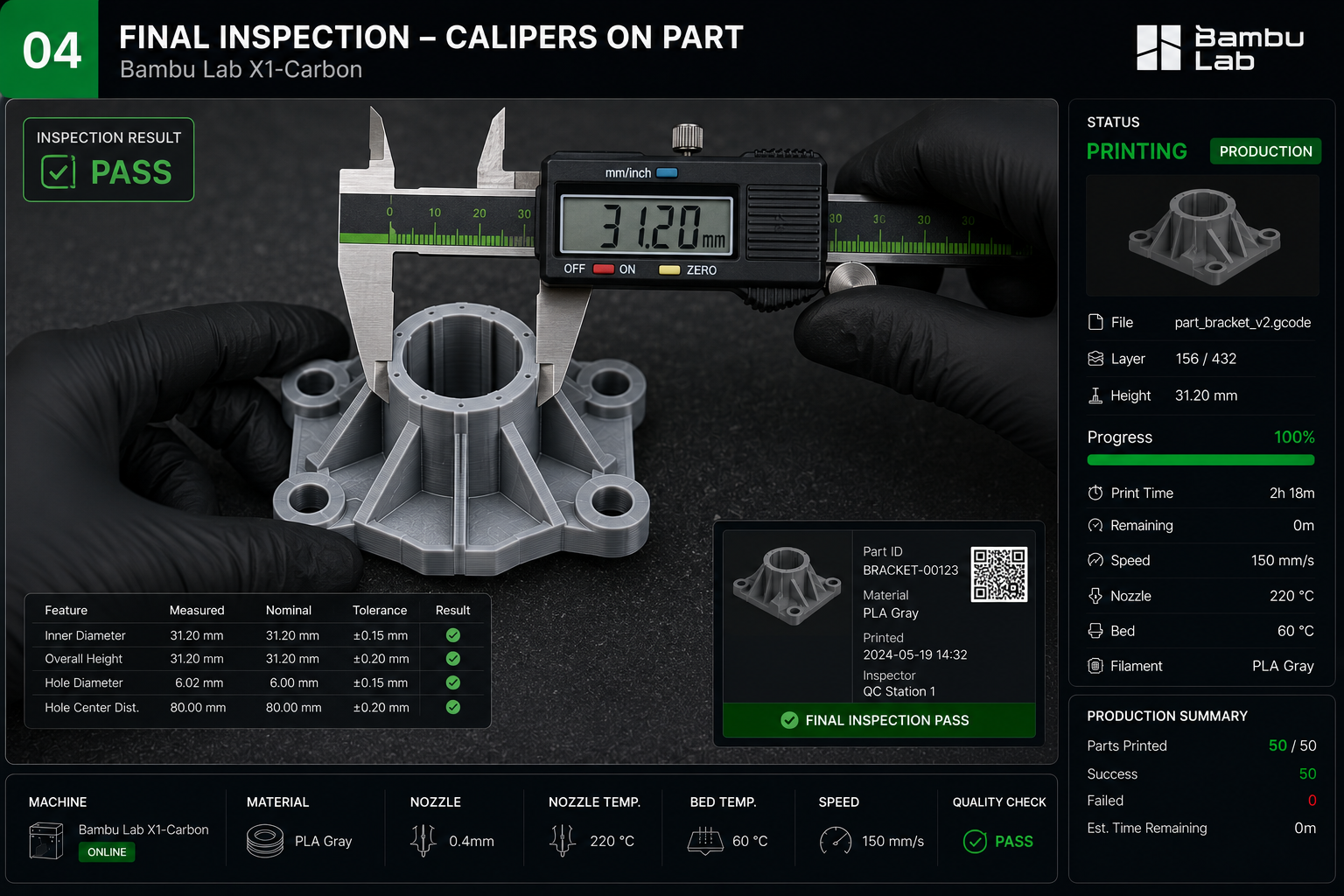
Post-processing and inspection

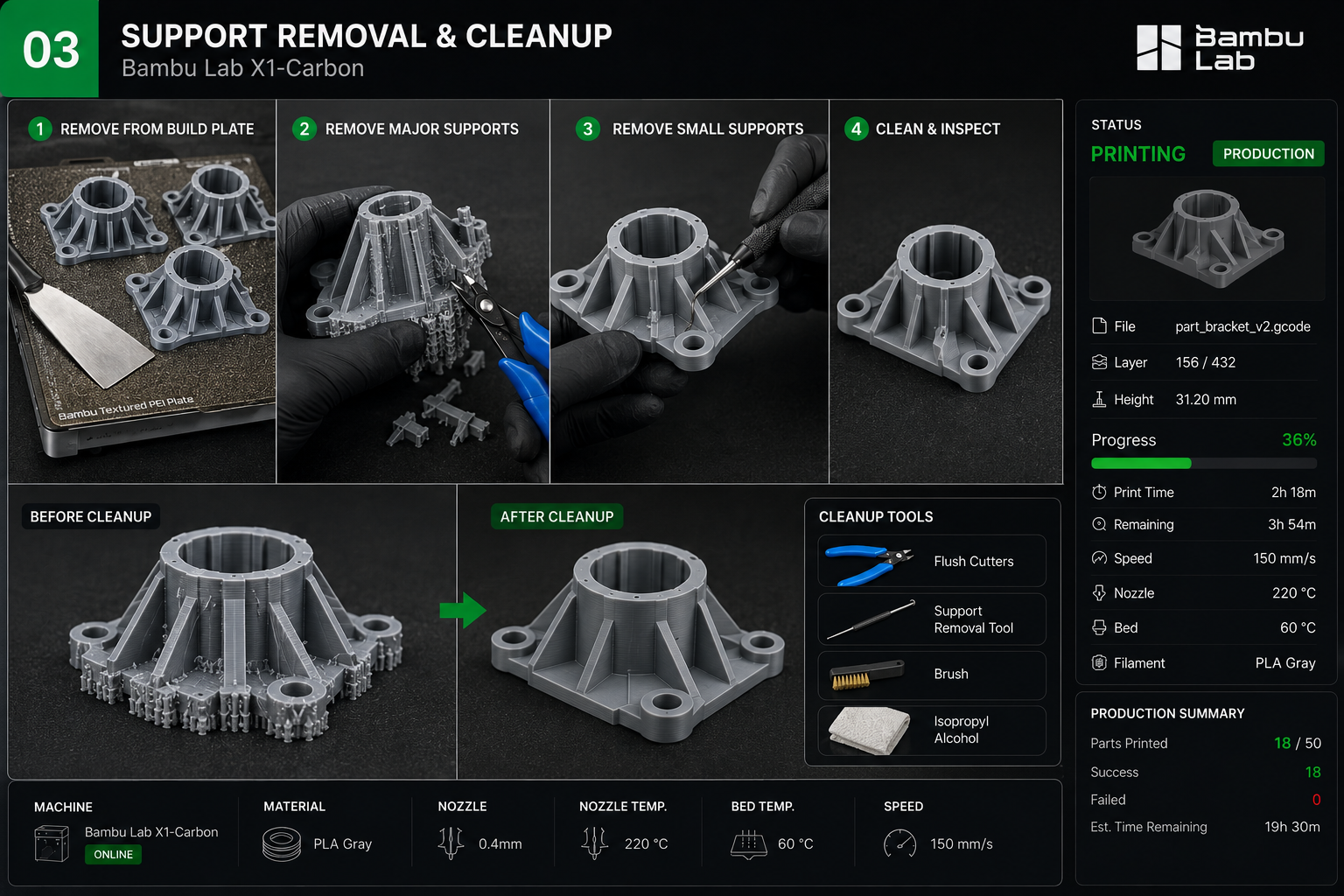
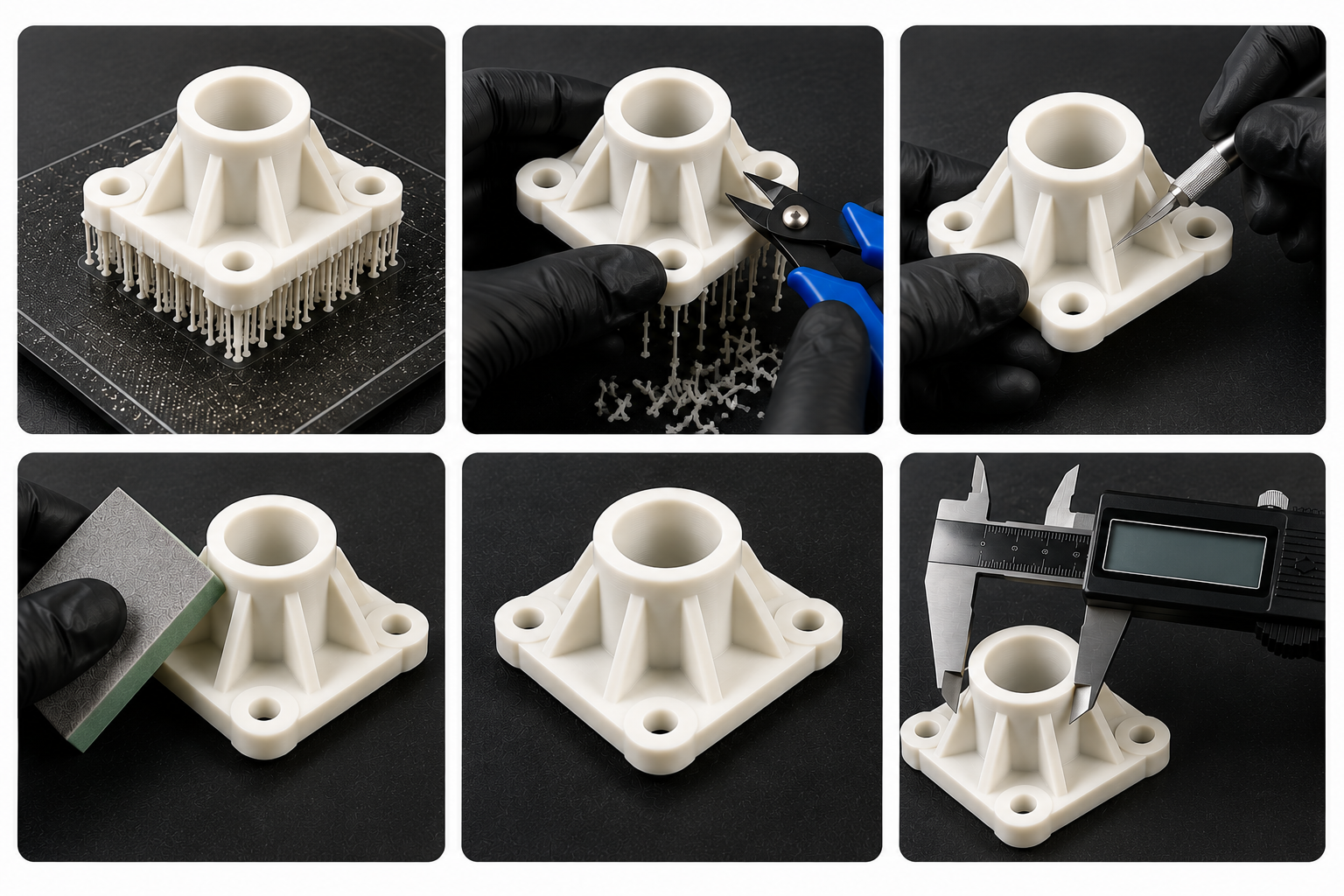
We remove supports, clean up edges, and inspect parts based on the functional requirements. If your project has critical fits or features, we align inspection to those needs.

Standard steps

  • Support removal and cleanup
  • Edge break and deburr where applicable
  • Visual check for defects impacting function
  • Fit verification for common interfaces

By request

  • Targeted dimensional checks on critical features
  • Insert installation and light assembly
  • Cosmetic finishing expectations defined up front
  • Build summary or documentation package
5

Delivery and iteration

We deliver parts with clear communication and support rapid iteration. If changes are needed, we track revisions and keep the build strategy aligned to the updated intent.

Delivery

  • Packaging appropriate to part sensitivity
  • Clear handoff and communication
  • Support for receiving and first-use questions
  • Optional documentation package

Iteration

  • Change tracking to avoid version confusion
  • Guidance on geometry changes and tolerance strategy
  • Material upgrades when required
  • Repeat builds with consistent parameters

FAQ

Common questions

If you have special requirements, we’ll align the workflow during intake.

What file types do you accept

STEP is preferred for engineering review. STL is acceptable for quoting and quick iterations. Drawings are helpful for critical dimensions and fit requirements.

Do you support tight tolerances

Tolerances depend on geometry, material, and orientation. For critical fits, we recommend planning for iteration or designing adjustability into the interface.

Can you help select materials

Yes. Share the application, environment, and critical features. We’ll recommend the best fit and explain tradeoffs.

How do you manage revisions

We track changes and confirm the latest revision before printing. For repeat orders, we can maintain controlled parameters and provide optional build notes or summaries for consistency.

Ready to run your next build the right way

Send your files and requirements. We’ll review feasibility, recommend material and build strategy, and help you move fast with confidence.